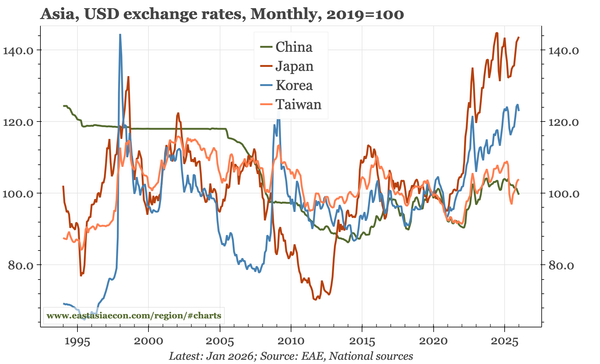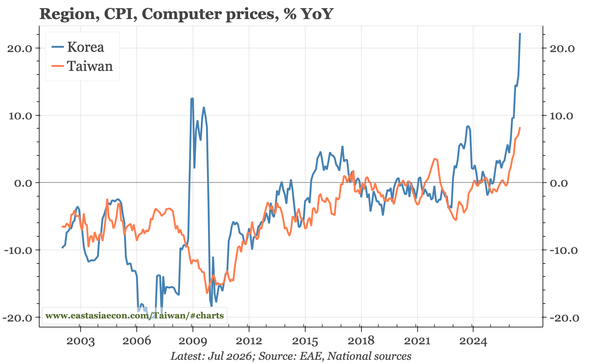
Region – cycles, structures and currencies
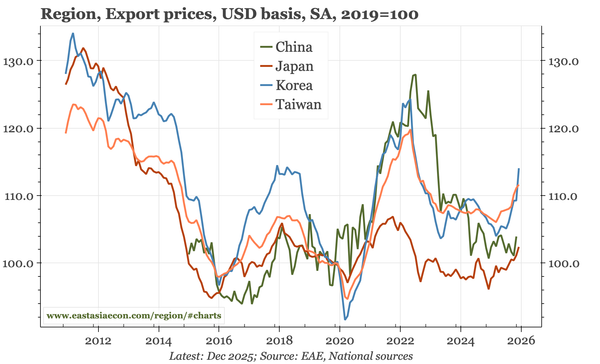
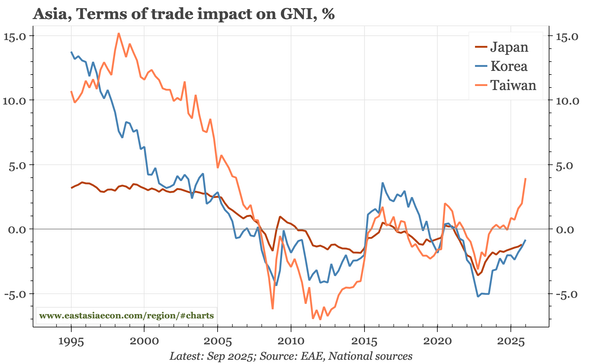
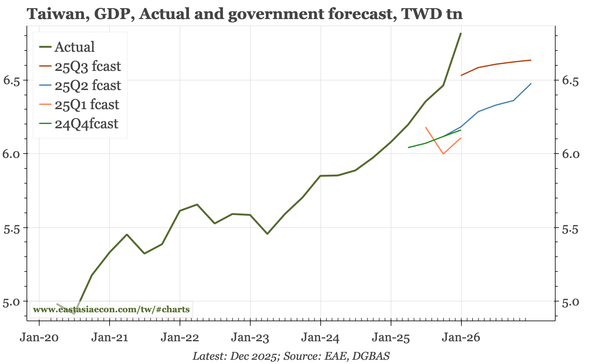
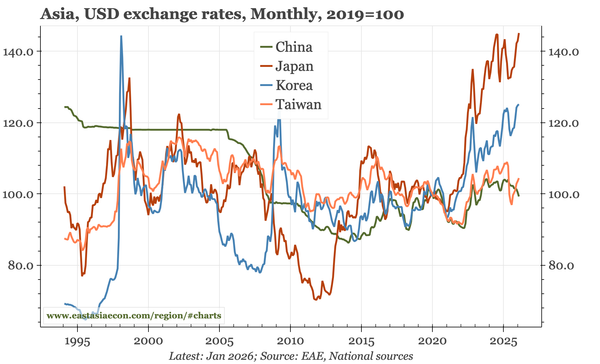
Using an update of my regional chartpack to think about exchange rates. Specifically, I think the cycle and structure dynamics are moving risk-reward in favour of Asian currencies. I'd argue that is true if the global picture is unchanged, but it could also be true if conditions in the US falter.
Last week, next week
China: the nominal stabilisation is fragile. Japan: with the cycle looking good, the risk of a BOJ upside surprise is the highest since July 2024. Korea: the upside scenario from the semi cycle still isn't the base case. Taiwan: macro becomes more interesting if the chip cycle sustains into 2026.
Last week, next week
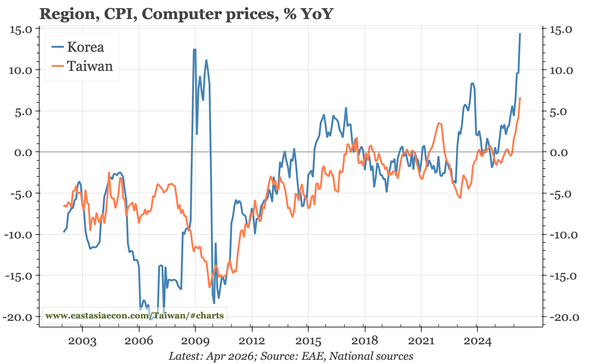
Regional themes: lessening deflation in China, but no sign of real recovery; the BOJ is likely to hike this month, but the JPY needs a hawkish hike; outflows into overseas equities in Korea change usual exchange rate relationships; inflation risks in Korea and Taiwan if AI chip demand is sustained
Region – manufacturing PMIs and Korean exports
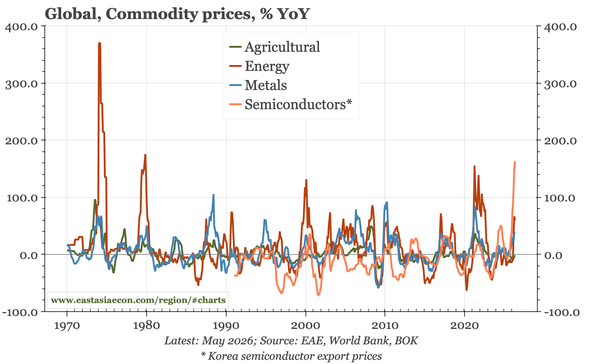
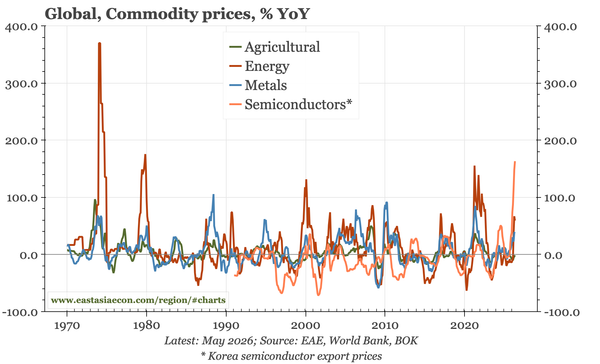
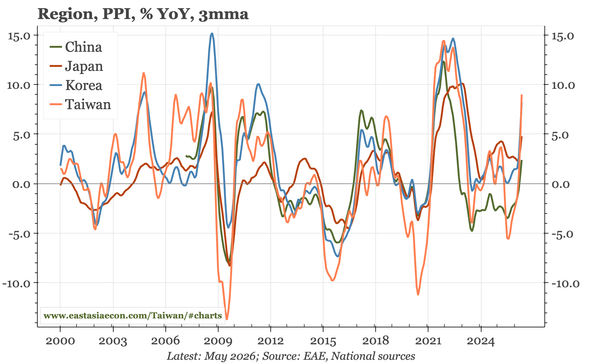
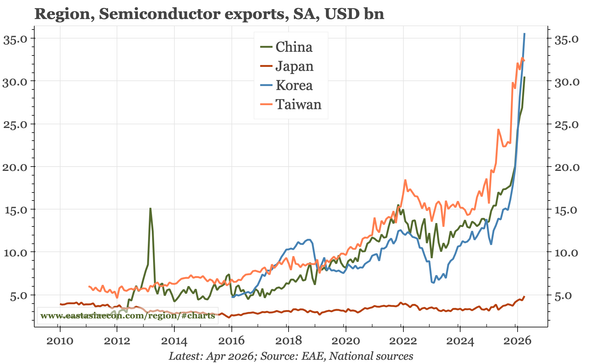
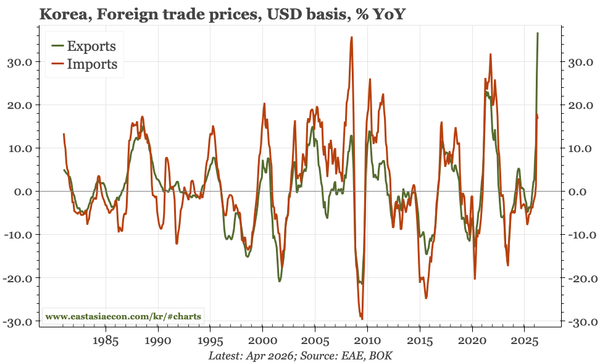
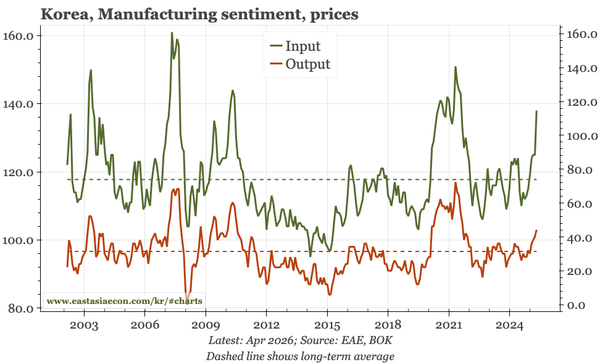
The mfg PMIs across the region mainly remain below 50. That shows that conditions outside of semiconductors remain poor. Semi is strong, and in Korean in export data for November, are departing from a normal cycle. Goods input prices pressures are rebounding, reflecting weak currencies.
Last week, next week
Trump's visit will dominate the news this week, particularly his trade talks with China and Korea, and whether he says anything about the JPY in Japan. It now doesn't look like the BOJ will hike on Thursday, but the tone should be more positive. The data highlight will be Korean business confidence.
Last week, next week
Market volatility is poised to rise again. In Japan, the obvious reason is the election of Takaichi, whose Abenomics-leanings are in conflict with the ongoing firmness of inflation. In Korea and Taiwan, the trigger is US relations. China, by comparison, looks more stable.
Last week, next week
Japan inflation indicators are mixed, so this week's Tankan survey and Ueda speech will be important. Korea's cycle is still weak, but this week's CPI data matter less when house prices have re-accelerated. Elsewhere, China's PMI will show whether nominal growth is softening again.
Last week, next week
The major themes: the ending of the first stage of China's post-2020 forced structural adjustment; in Japan, peaking of inflation but BOJ still to hike; BOK cuts but inflation higher than I would have expected; expecting renewed TWD strength. I am now away for a few days, back on September 16th.
Last week, next week
China's structural downturn since 2021 has likely bottomed. But I think real recovery is needed for a further rally in equities. Japan's growth and inflation have survived the tariff hit, putting the BOJ back in play. For Korea, I am questioning the BOK's outlook for inflation and thus rates.
Region – understanding the data issues
I've spent a lot of time in recent years building an infrastructure to analyse the economies of East Asia. Doing so has given me a good understanding of the data challenges in the region. In this video, I discuss those, and introduce the platform I've built to present all the data I've collected.
Last week, next week
Data themes remain unchanged. As tariffs – perhaps – stabilise, official sentiment is catching up to the data in Japan, with growing concern about inflation. In China and Korea, market sentiment has improved ahead of the data. Given Trump's desire for a deal, that's probably more justified in China.
Korea – defying demographics
My latest video, discussing how Korea is managing to avoid the labour market decline that would usually be expected as the population ages. This is likely to dampen wages – and potentially inflation – in Korea relative to Taiwan, where the part rate isn't rising in the same way.
Region – does low UE mean labour market tightness?
20 slides analysing structural labour market issues: the puzzle of low unemployment but weak wage growth; supply side changes that have deflected demographics; demand side strength as China offshoring ends; and the implications of the renewed trade war.