China – has the Fed really been a constraint?
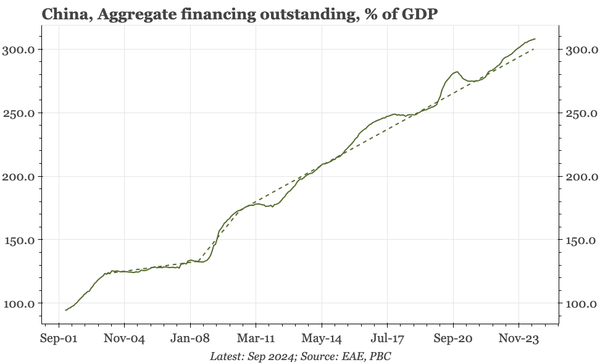
I had an op-ed piece in today's Nikkei Asia. The headline argument is that monetary policy isn't sufficient to boost growth. On its own, that isn't much of a differentiated view. The nuance is the reasoning: China has monetary policy independence, so Fed cuts in themselves don't change anything.
Korea – on track, except for services
Overall, data are falling into place for a BOK cut. Exports were firm in September, but the PMI was terrible. Headline CPI dropped under 2% for the first time since 2021, and property prices might be decelerating. The one counter-trend is services CPI, which has rebounded to 3%.
Japan – Q3 Tankan details
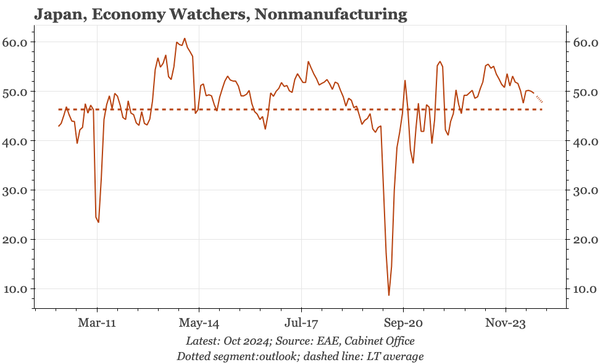
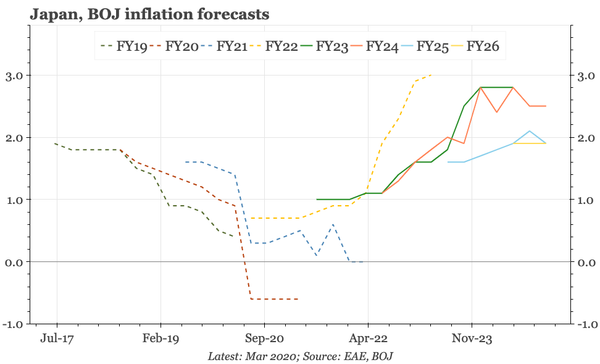
The detailed Q3 BOJ Tankan shows both labour market tightness and corporate output price expectations remaining as elevated as any time since the 1980s. Clearly, the economy hasn't been derailed by the market volatility of early August, and without a new shock, the BOJ seems likely to hike again.
Japan – Q3 Tankan on track
Ueda's caution and now politics are the big near-term policy dynamics. Politics might affect monetary policy longer-term, if Ishiba's as PM is as hawkish as his reputation. But the cycle hasn't been derailed yet, with the Q3 Tankan showing sentiment, the labour market and pricing all remaining firm.
China – What to watch
To think the equity recovery is lifting overall growth, things to watch include: the yield curve; real estate debt; PBC base money; and household deposits. Since Friday, the YC and real estate debt have moved, but not significantly yet. Base money and HH time deposit data are lagging.
China – PMIs show policy has work to do
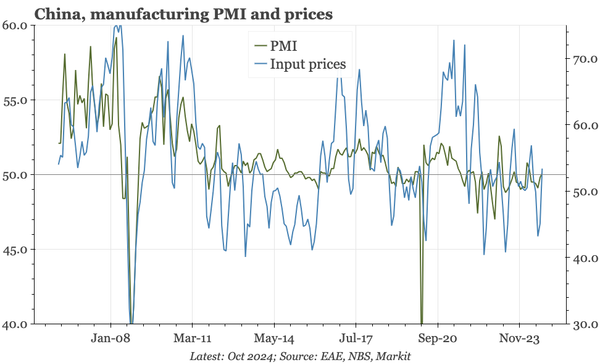
Equities say that data are now dated, with PBC policy meaning a decent recovery is in the works. But in assessing whether that's right, the data are important, showing how much work policy needs to do. The PMIs were weaker again in September, with the construction PMI, especially, rarely worse.
China – why is fiscal....late?
I've already posed the question of why the PBC only cut 20 bp. Today, I've got a follow-up: why wasn't fiscal announced at the same time? Reports suggest that is in the works, but China is best-placed of anywhere to do coordinated monetary-fiscal. It feels significant that this didn't happen.
Korea – doveish BSI
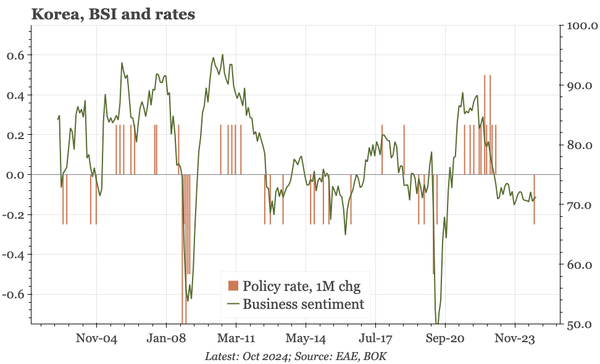
Today's survey from the BOK doesn't show much change in business sentiment, which remains weak. But it does point to a real softening in pricing in manufacturing. With the domestic macro data now largely in place for a cut, the remaining issues for the BOK are housing, and external developments.
Region – Asia's two distinct dynamics
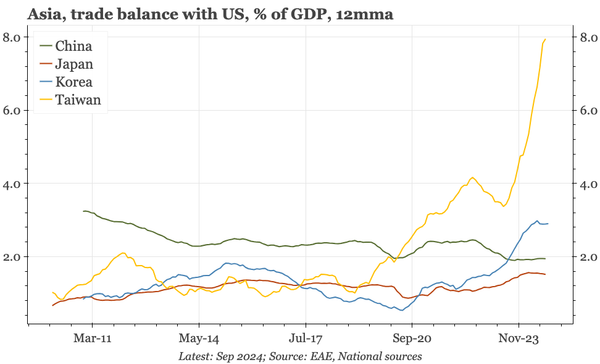
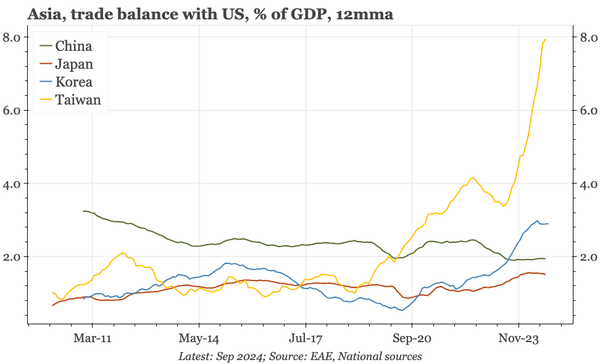
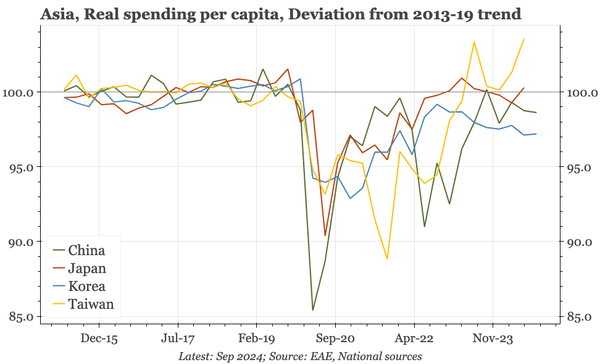
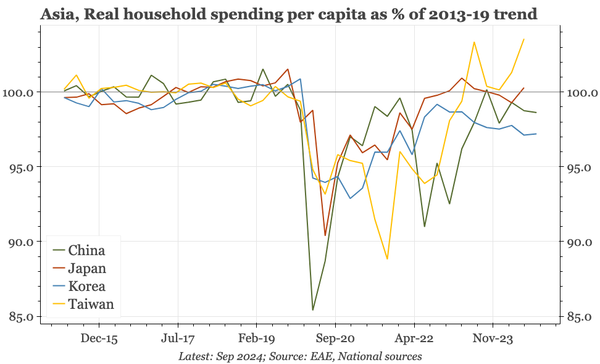
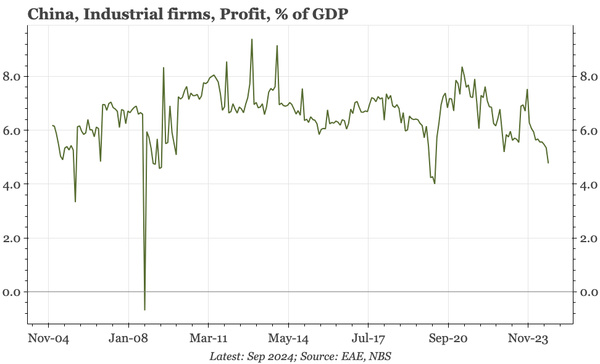
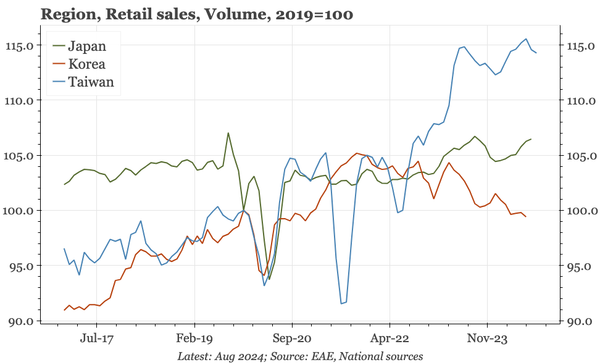
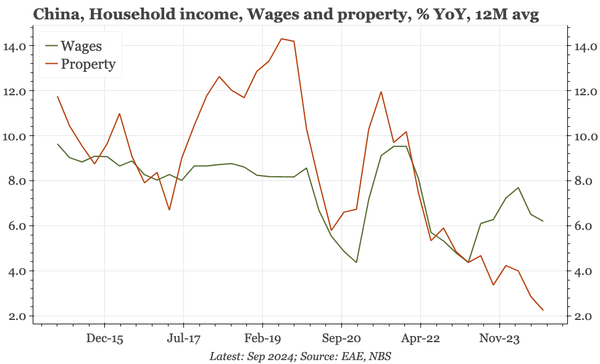
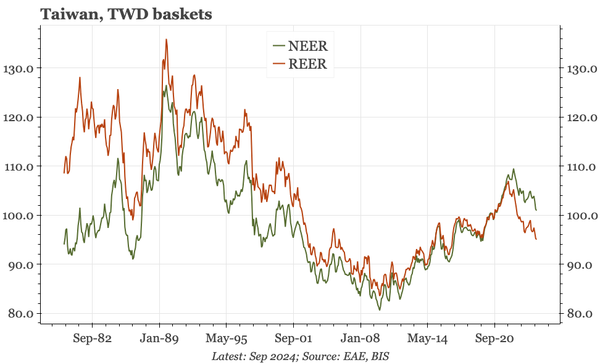
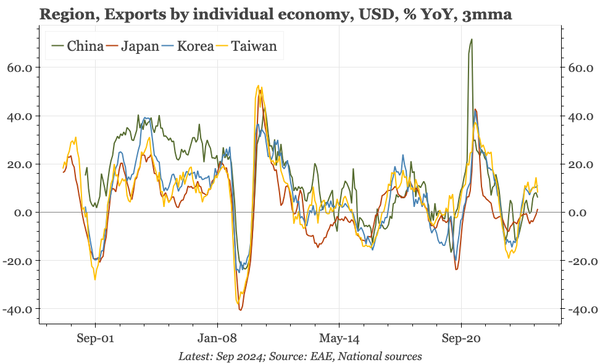
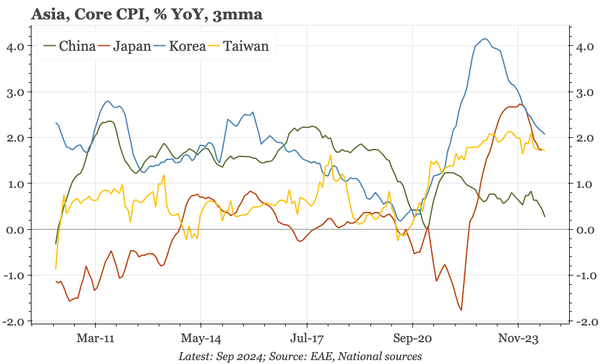
If the US-led global trend is a sort of reversion to mean, then Asia has two very differentiated dynamics. On the one hand, there's Japan and Taiwan, which look like breaking structurally to the upside. On the other, there's China, which is more sluggish than at any time in the last 30 years.
Korea – not an all-clear
Confidence and overall inflation expectations fell in September's consumer confidence survey. But property price expectations ticked up. The change wasn't big, but is enough to cloud the outlook for a BOK that in recent months has explicitly associated its monetary stance with the property market.
Japan – cold feet
The BOJ's stance now has two clear dimensions. One, as before, is its constructive view of the domestic economy. But now there's also an explicit concern about US growth. As long as one offsets the other, the BOJ has time. However, if the US soft lands, then the BOJ will have ground to make up.
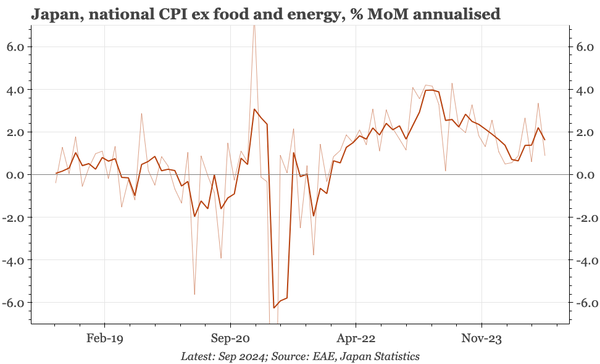
Japan – services inflation back to 2%
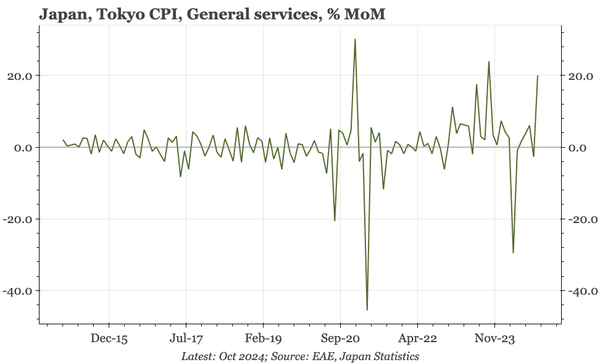
So, no surprise from the BOJ today. But the bank's statement remained constructive, revising up consumption. Today's separate services inflation data for August was also firm. Import prices have receded on the rising JPY, but we'd think the BOJ should be hiking again with a strong Q3 Tankan.
Taiwan – goldilocks
Taiwan's CBC kept rates on hold yesterday, but hiked the RRR to control housing. More interesting was the bank's very benign outlook: growth neither fast nor slow, and inflation falling to just within its target range. Particularly regarding inflation, that doesn't allow much room for error.
China – when will commodity exporters feel the pain?
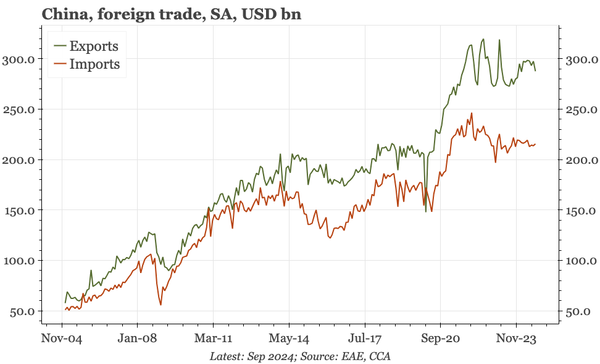
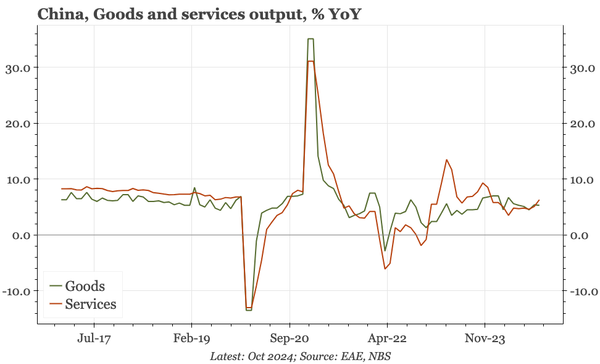
China's imports are two-speed. That's like the economy, but with a big difference: whereas for macro it is property that is weak while mfg is strong, for imports it is commodities that are more resilient than capital goods. Like the overall macro muddle through, that resilience likely can't last.
China – GDP growth tracking 4%
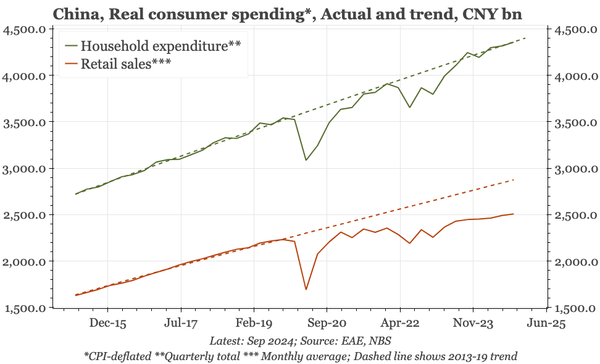
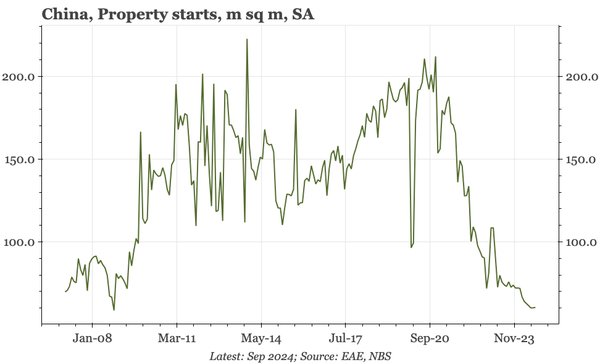
August data suggest GDP is now only growing by around 4% YoY. The headwinds remain property activity, which dropped again in August to new lows, and retail sales, which has now contracted MoM in five of the first eight months of 2024. Sustaining muddle through is getting much more difficult.
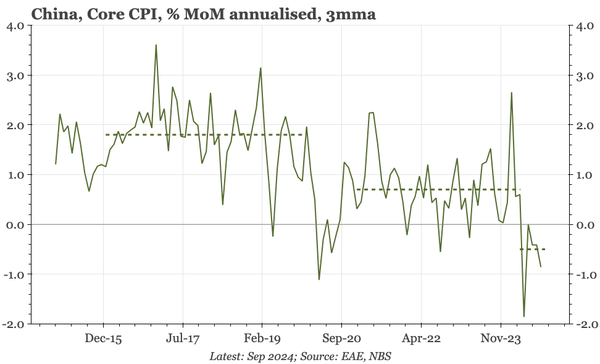
China – still stuck in deflation
Today's industrial price data for the first 10 days of September and property prices for August show intensified deflationary pressure. Yesterday's monetary data were weak. The PBC said yesterday that it will focus on price stability, but it also said it has plenty of other things to do as well.
China – rates still have downside
More than 12M ago, we argued yields should fall. In that respect, today's drop to record lows isn't a surprise. We don't see anything fundamental yet to cause a change in direction. That's based on four factors: the PBC's reaction function, inflation, household savings, and the CNY.
Japan – still on track
It is clear that the market moves that accompanied the BOJ's July policy changes are impacting prices. But it isn't obvious that they have derailed the underlying path for the economy. It seems to us the door remains open for an October hike, with the obvious risk being events in the US.
Korea – UE down, but the BOK gets ready to cut
Data today show exports still growing, and UE still low. The BOK hasn't been ignoring exports, but the bank has been more focused on weak domestic demand. The labour market data don't suggest that weakness is disappearing, with strength in employment concentrated in state and part-time positions.
China – exports flat-lining
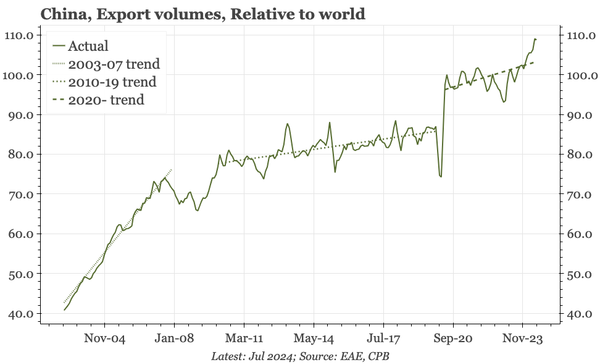
It seems increasingly unlikely that exports can offset the weakness of domestic demand. Today's export data for August weren't strong. Volumes might be better, but the regional export cycle is likely peaking, and that at a time when China's domestic demand seems to be weakening further.