

Subscribers Only
Last week, next week
A summary of what happened on East Asia Econ last week, and what to look for in the next seven days.
A summary of what happened on East Asia Econ last week, and what to look for in the next seven days.
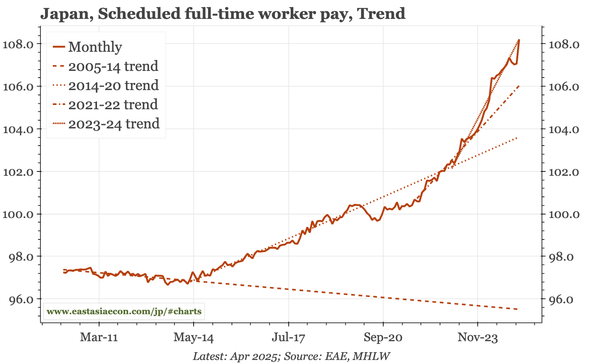
With the bigger shunto rounds since 2023, wages have tended to jump early in the fiscal year. That was true this year, with full-time regular wages in April back to the faster post-2023 trend. However, part-time wages were flat, which will matter if confidence and the cycle don't rebound in 2H25.
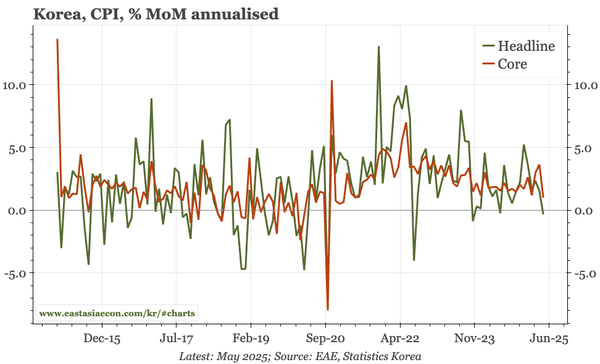
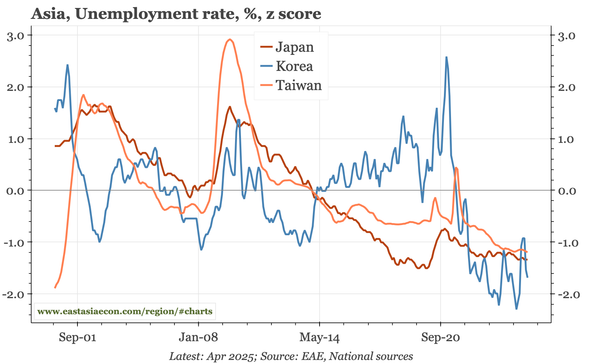
The important detail in today's CPI release for May was the drop in MoM core. Given the weakness of demand – now beginning to show up more clearly in the labour market – that moderation should persist. With global commodity prices weighing on headline, inflation should be less of an issue in 2H25.
The tone of Ueda's speech today was rather constructive. Of course, he discussed the risks from tariffs, but didn't think they were likely to derail the economy. If some kind of Japan-US deal can be reached – and progress is reportedly being made – BOJ hikes will quickly be back on the table.

A shorter video that last time, summarising the most important issues for each economy, giving a regional ranking, and discussing market implications.
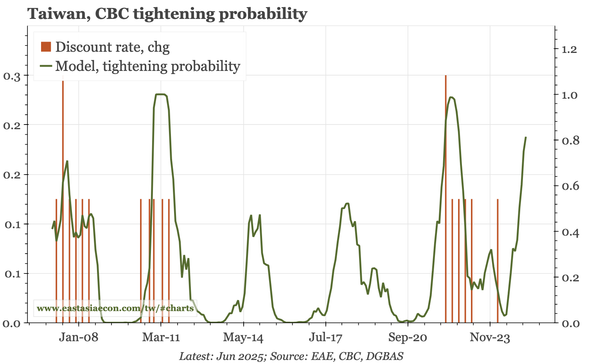
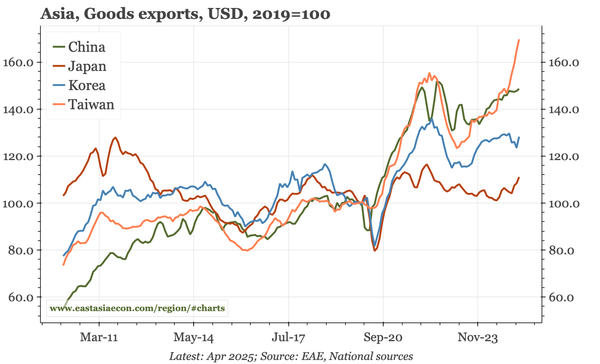
My model points to a rising risk of CBC tightening. But that reflects the export blow-out of 1H25, and neither markets nor officials expect that to persist. Moreover, there are the inklings of a structural rise in the TWD, which would mean tightening via the currency. Rates could actually be cut.
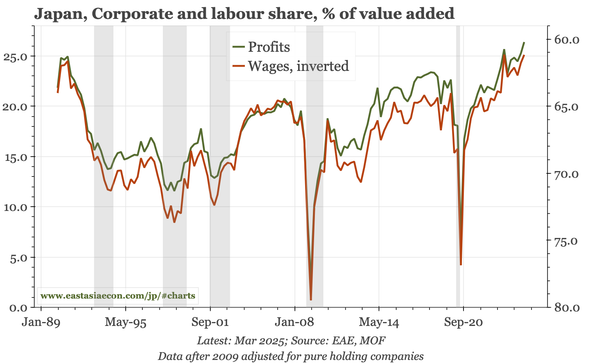
Operating profits reached another record high in Q1. Like the cycle overall, profits have been led by non-manufacturing, especially in terms of margins. That is partly due to cost-cutting, with the labour share dipping in Q1. Capex is rising, but not particularly fast, despite high cash holdings.
A summary of what happened on East Asia Econ last week, and what to look for in the next seven days.
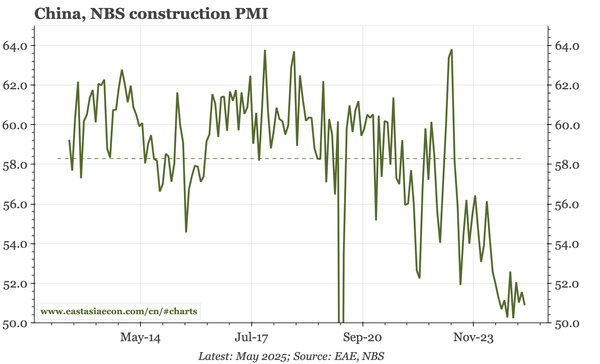
The manufacturing PMI did improve in May, lifted by a bounce in export orders. But there's no sign of a turnaround in the underlying economy, with the construction PMI weak, output prices softening, and business confidence remaining poor.
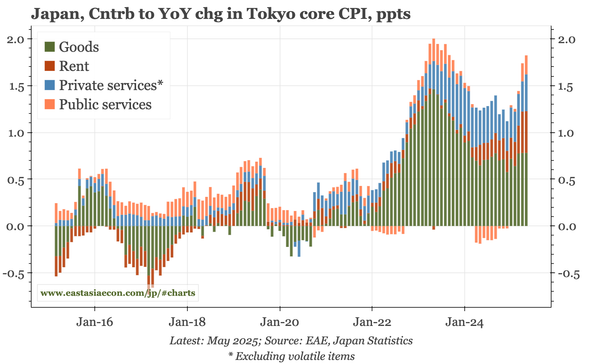
Tokyo data show May inflation remaining high. In other releases, unemployment is low and retail sales sluggish. Tokyo CPI dynamics are diverging from national trends, because of the stronger property market. But still, the message for the BOJ is the same: inflation is strong, but growth isn't.
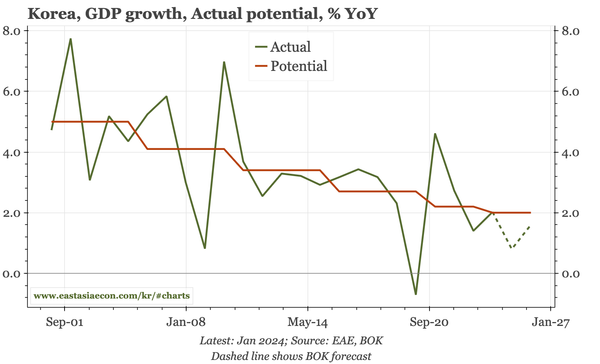
The BOK cut rates again to 2.5% on the back of further downgrades to the outlook for growth. That forecast makes further cuts likely, though remarks today suggest a sharpening of the debater within the MPC about the need to boost growth versus the risk of rate cuts just pushing up asset prices.
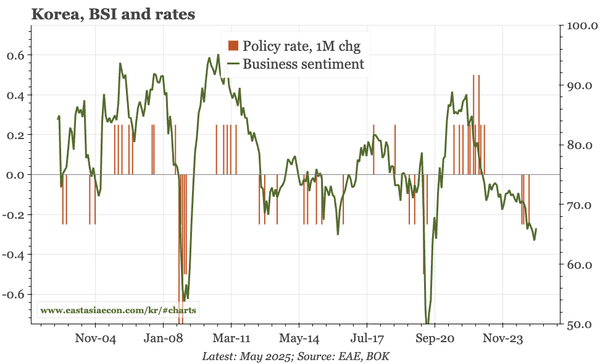
Despite an improvement in consumer confidence, all-economy sentiment remained weak in May, dragged down by poor confidence in the corporate sector. However, inflation indicators are falling too. Everyone – it seems – expects the BOK to cut tomorrow, and that likely won't be the last in the cycle.
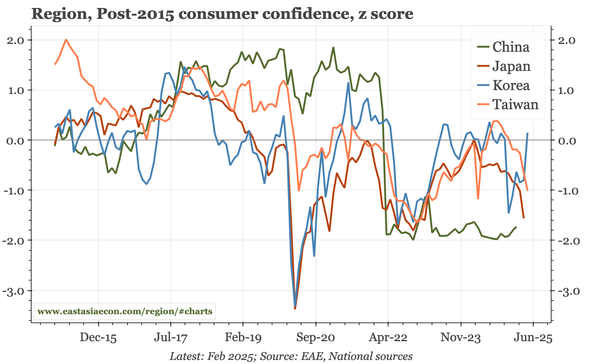
In Taiwan and Japan, rising inflation is eroding consumer confidence. In Korea, by contrast, less domestic uncertainty and lower inflation triggered a bounce in confidence in May. The differing inflation pictures offer a good illustration of why the BOK is cutting, while the BOJ and CBC are not.
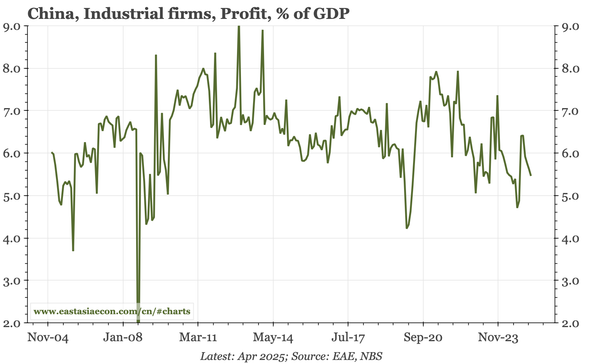
Official industrial earnings show profitability deteriorating again. A rebound would be first seen in rising prices and improving corporate sentiment, neither of which is yet visible. The weakness is concentrated in heavy industry, but profitability in downstream sectors is only flat-lining.
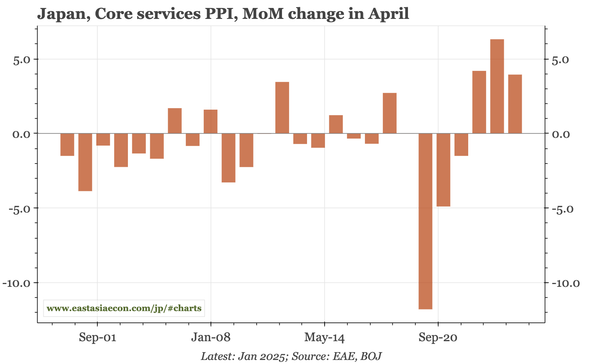
Today's services PPI showed solid underlying inflation. However, the recent rebound in CPI has been driven by food prices, and in separate remarks today, governor Ueda sounded more concerned about those. With a meaningful deal on tariffs, further rate hikes would quickly come back onto the table.
A summary of what happened on East Asia Econ last week, and what to look for in the next seven days.
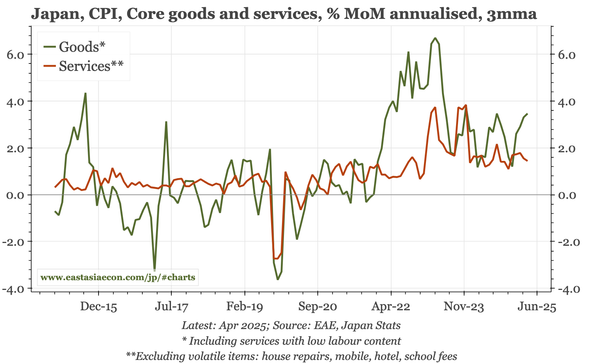
BOJ core rose again in April, boosted by goods, keeping in place the cost of living squeeze that is feeding into declining sentiment. My measure of core services price inflation continues to run a bit under 2%. That's ok, but the drop in sentiment has clearly shifted risks to the downside.
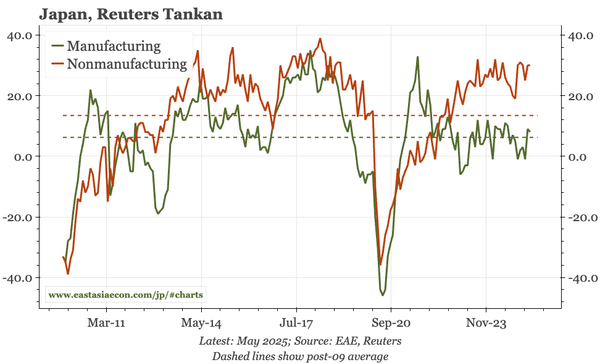
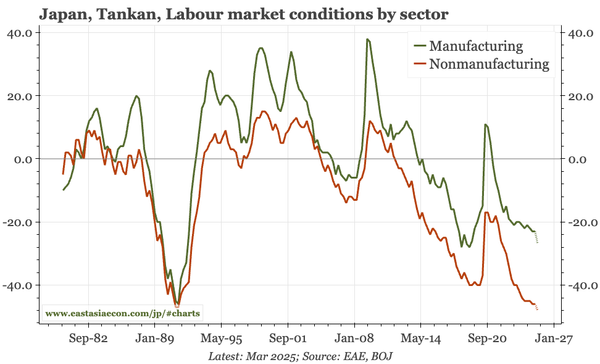
Data today don't darken the price- and tariff-driven pessimism painted by the April EW survey. In the May Reuters Tankan, non-manufacturing sentiment was firm, supported in part by record tourist inflows. Manufacturing sentiment didn't drop further, and separately, export volumes for April rose.
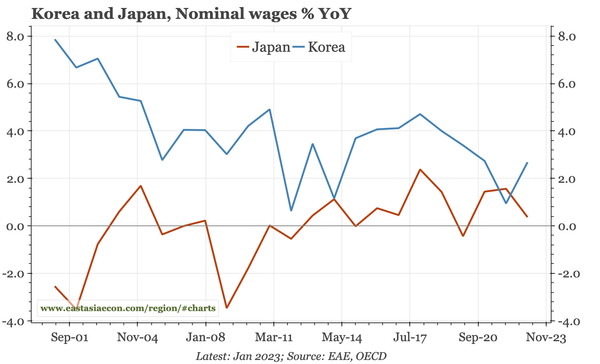
Historically, in terms of both savings and inflation, Korea has looked different from the other East Asian economies. But that is now changing. In recent years, Korea has become a clear external creditor, and labour market developments warn of a structural slowdown in inflation.
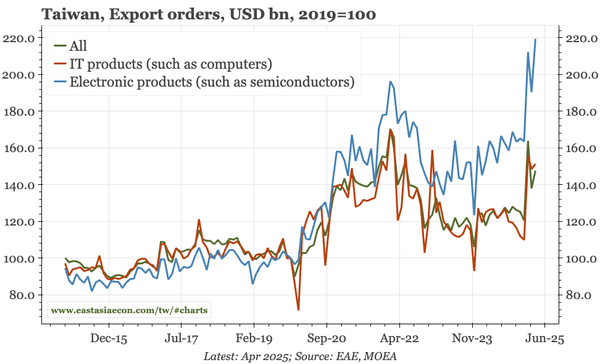
This year's surge in export orders continued in April, but the drop in the diffusion is warning of a pullback. For the current account, the strength in exports this year has been offset by rising imports and a smaller income surplus. For the TWD, export inflows have been offset by equity outflows.
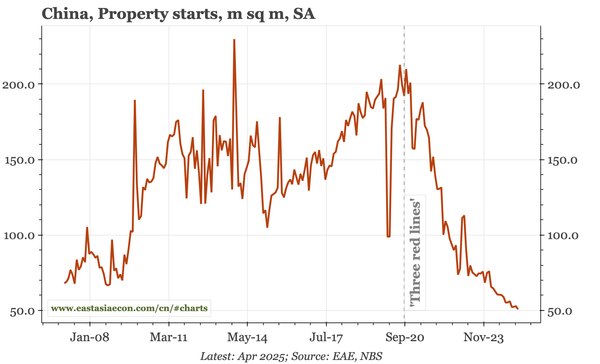
Headline YoY data are still benefiting from the Q4 pick-up, meaning another 5% growth quarter is likely. But sequentially, growth is slowing again, with no sign of any turnaround in construction that might put a sustainable floor under the overall economy.
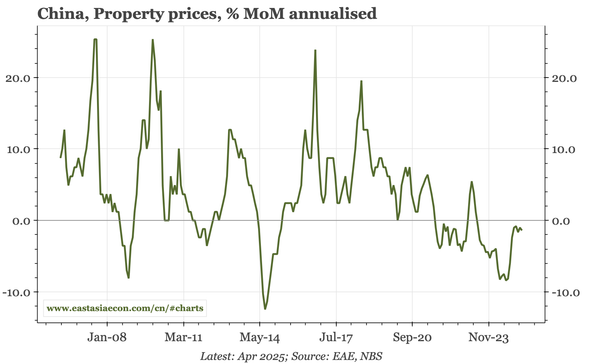
After a clear improvement from September, property price deflation since December has settled at an annualised pace of around -1.5%. Sluggish mortgage lending isn't pointing to a further recovery from here. On these official data, average prices are now down 6% from the peak in 2021.

A summary of what happened on East Asia Econ last week, and what to look for in the next seven days.
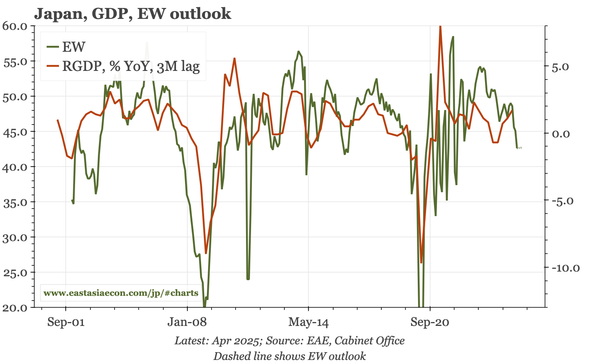
The details of today's GDP release were decent, with capex and consumption per capita ticking up. Ordinarily, those details would matter more than the slight export-driven QoQ decline in GDP. But the fall is worrying, with the recent drop in sentiment surveys warning of a bigger decline ahead.
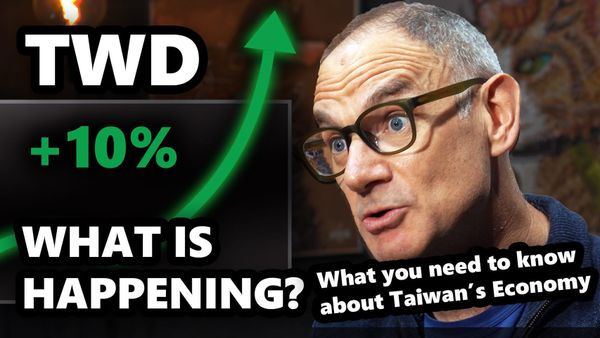
A video bringing together the arguments I have been making for the last few months on how the economic factors that that helped anchor the TWD in its tight 28-33 range from the late 1990s are now changing.