East Asia Econ
The platform for tracking and understanding East Asia macro
Latest analysis
Japan – can the BOJ afford to wait?
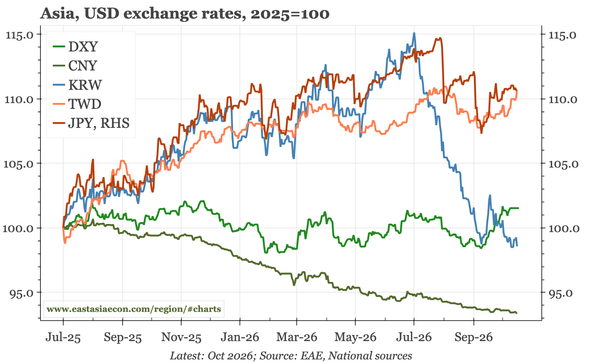
The BOJ seems to be messaging that it will stay on hold next week. That seems risky to me, given that while the Iran War might dent growth, it is highly likely to raise inflation. A BOJ that is further perceived as too slow will put pressure on the $JPY to pass through the artificial barrier of 160.
Region – the offset to oil: semiconductors
Whether the AI cycle sustains will be as important for East Asia markets as the Iran War. That's because the region is facing a negative energy supply shock, but also a positive semiconductor demand shock. Semiconductor trade trends are now critical for macro, as shown by these 12 charts.
Korea – inflation, and higher growth
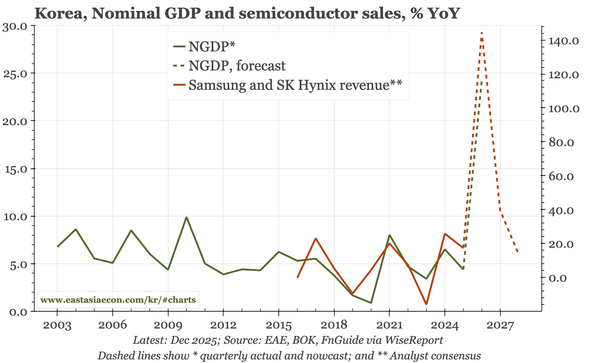
Today's consumer confidence survey warns of higher inflation but slower growth. That is the BOK's base case, and if growth does slow, then there is a reason to look through inflation. But today's Q1 GDP data show much higher growth, boosted by a semi cycle that isn't yet ending.
Korea – two warnings about inflation
Yesterday's loan officer survey and today's PPI print both warn about inflation risks. However, in PPI, it is only goods prices that offer clarity. Services PPI has risen too, but seems to suffer from the sort of distortions that are making trends in CPI services inflation difficult to interpret.
China – is the deflation crisis over?
The three red lines and covid delivered a huge, multi-year blow to the economy. Multiple signs have started to emerge that this hit has been absorbed, and that China macro is stabilising. This suggests that the recent lessening of deflation might prove durable, with broad implications across markets
China – cycle stabilisation
The broad theme is macro is stabilisation, shown by three indicators that are bottoming after multi-year declines: property starts, household demand deposits, and producer prices. The implications, as are already being seen, are slower rate cuts, stabilising yields, and a stronger currency.
Korea – TOT still up in March
Energy import prices surged 50% in March, and that will undoubtedly raise inflation. However, Korea's terms of trade actually continued to rise (just about), helped by the continued sharp rise in chip export prices. For Korean growth, there is an offset to this energy crisis.
China – semiconductors boost imports
Today's trade data for March don't get us so far: only headline data have been released, and underlying trends are still obscured by Chinese New Year distortions. Overall, however, exports look firm, with auto sales rising again. Imports are very strong, but that is more about chips than energy.